Piter Bijma
Assistant Professor of Animal Breeding and Genetics at Wageningen University & Research.

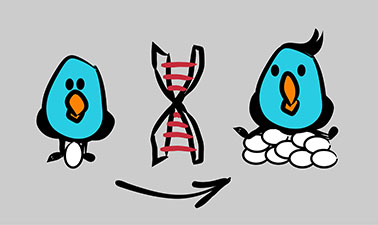
Animal breeding involves the selective breeding of domestic animals with the intention to improve desirable (and heritable) qualities in the next generation. This course introduces the steps required to design a program for breeding animals and teaches the genetic and statistical concepts that are needed to build a solid breeding program.
In this course you will learn how an animal breeder balances the need for improving desirable qualities of the animals with the need for genetic diversity and long sustainability of the program. The scientific concepts in genetics that are applied in animal breeding will be explained and you will learn to apply the models and computational methods that are used in animal breeding.
PrerequisitesKnowledge in the area of statistics at 2nd or 3rd year university level is needed to follow this course successfully.
For whomProfessionals working with animals will use the knowledge from this course to understand the impact of breeding on their populations, and will be able to include the genetic principles in their decisions. For further studies such as M.Sc. level courses in breeding and genetics, this course will allow you an advanced starting point.
Although this course is open to everyone, it is particular useful for breeders of:
Module 1: Introduction to Animal Breeding
Explore the seven steps required to set up a breeding program and understand how modern breeding systems are structured and implemented.
Module 2: The Breeding Goal
Learn how to define a breeding goal for both genetic improvement and the maintenance of genetic diversity, and understand the key characteristics of effective breeding objectives.
Module 3: Collection of Information and Family Relationships
Examine the use of performance data, pedigree information, and DNA information in breeding programs. Learn how relationships and inbreeding are quantified and what consequences they have for populations.
Module 4: Genetic Models
Understand the principles of genetic models and how to apply them to different traits. Learn key concepts such as heritability, repeatability, common environment effects, and Mendelian sampling.
Module 5: Ranking the Animals
Learn how to estimate breeding values using phenotypic and genomic information, and how to assess the accuracy of estimated breeding values.
Module 6: Response to Selection
Explore how to calculate genetic gain from selection, understand the trade-offs involved, and examine mating strategies and their long-term impact on inbreeding.
''This course is very important especially developing countries like Africa where there is no well planned Breeding policy for the different farm animals. Because of this, they couldn't get the expected production and productivity is very low.''
''All the course organizers were well prepared and knowledgeable. That was very respectful of their learners and the profession of animal breeding. I can now see why Wageningen University is a leader in teaching and research of animal science!''
Assistant Professor of Animal Breeding and Genetics at Wageningen University & Research.
Full Professor and Chair of the Animal Breeding and Genomics (ABG) group at Wageningen University & Research.

Assistant Professor of Animal Breeding and Genetics at Wageningen University & Research.

Professor of Animal Breeding and Genetics at Wageningen University & Research.
Research Associate in Animal Breeding and Genomics at Wageningen University & Research.
Assistant Professor of Animal Breeding and Genetics at Wageningen University & Research.